


Boot lacing has always been about more than keeping your boots on your feet. Long before it became wrapped up in scene myths, politics or fashion cycles, lacing was a matter of control, safety and discipline. Subcultures did not invent boot lacing. They inherited it, modified it, argued over it and, eventually, stripped most of its false rules away.
To understand boot lacing properly, you have to start before punk, before skinheads, before the internet turned half-remembered local customs into global “rules”. Long before it was read as a signal or loaded with meaning, lacing was simply a practical solution to a practical problem. It developed in workplaces, on building sites, in factories and in the military, shaped by the need for stability, safety and endurance. What later became aesthetic or symbolic was originally functional, refined through repetition and necessity rather than theory or identity. Starting there strips away most of the confusion and leaves you with what actually matters: why these methods existed in the first place and why they still work.
The history of boot lacing
Laced boots emerged as a practical solution in military and industrial environments. Early work boots used simple criss-cross lacing because it distributed pressure evenly across the foot and allowed quick adjustment. As boots became taller, especially in military use, lacing methods evolved to prevent ankle strain, reduce loose ends and keep boots secure during long marches.


© https://www.britannica.com/
By the late nineteenth and early twentieth century, straight bar lacing and ladder-style lacing were already common in armies across Europe and North America. These methods reduced friction points, made boots easier to tighten uniformly and kept laces from snagging.
After the Second World War, surplus boots entered civilian life. Workers wore them because they were cheap and durable. Youth subcultures adopted them because they were real. The boot arrived already carrying the visual weight of labour, authority and discipline. Lacing styles followed.
Adoption by skinheads
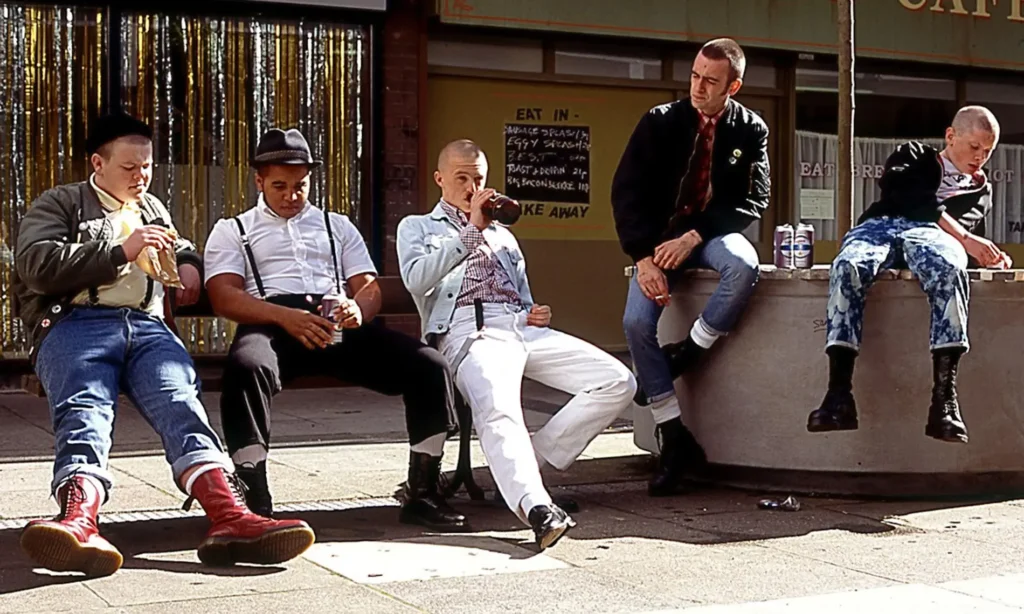
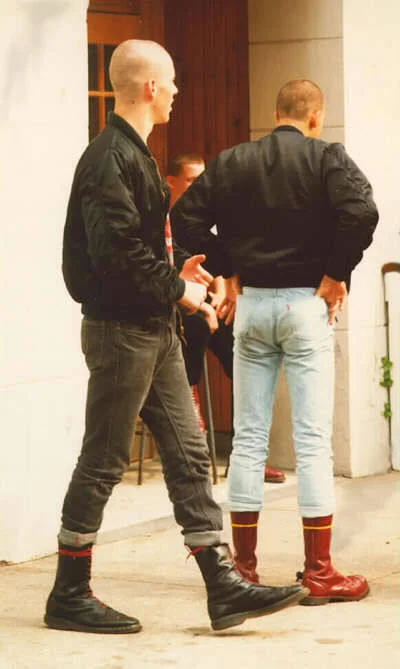
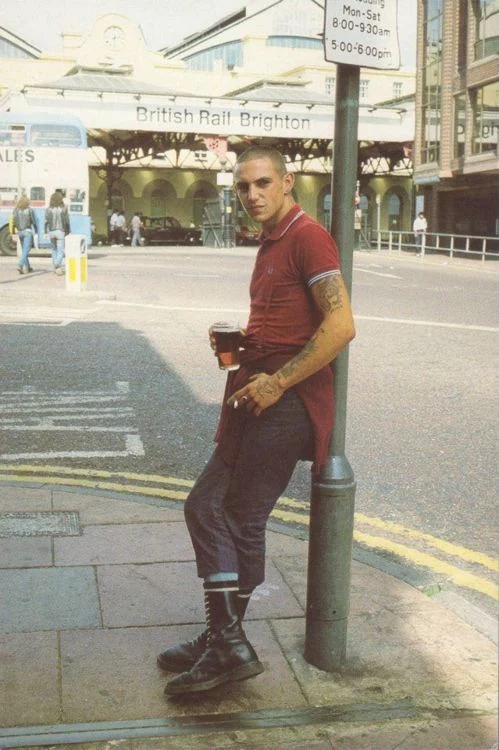
When skinheads began wearing boots in the late 1960s, they did not adopt them as symbols in the way later scenes often would. Boots were already part of working life. Dock workers, factory hands, builders and warehouse staff wore them because they were practical, affordable and hard-wearing. Skinheads adopted boots for the same reasons. They matched a lifestyle rooted in work, movement and time spent on your feet. The way boots were laced followed function rather than ideology. Criss-cross and straight bar lacing were common simply because they worked and were already familiar. Any sense of discipline or severity came from the boots themselves and how they were worn, not from invented rules. Lacing, like the rest of the skinhead look, was inherited from everyday working-class reality and carried forward without ceremony.
© Christophel/Alamy
Why lacing still matters and how to do it right
Boot lacing still matters because it directly affects how your boots function, how long they last, and how they carry themselves on your body. This is not abstract or symbolic. It is mechanical and physical.
Poor lacing leads to uneven pressure, premature creasing, heel slip and ankle fatigue. Good lacing locks the foot where it should be, supports the ankle without cutting circulation, and allows the leather to break in evenly. Over time, that difference is visible. How you lace should start with how you use your boots.
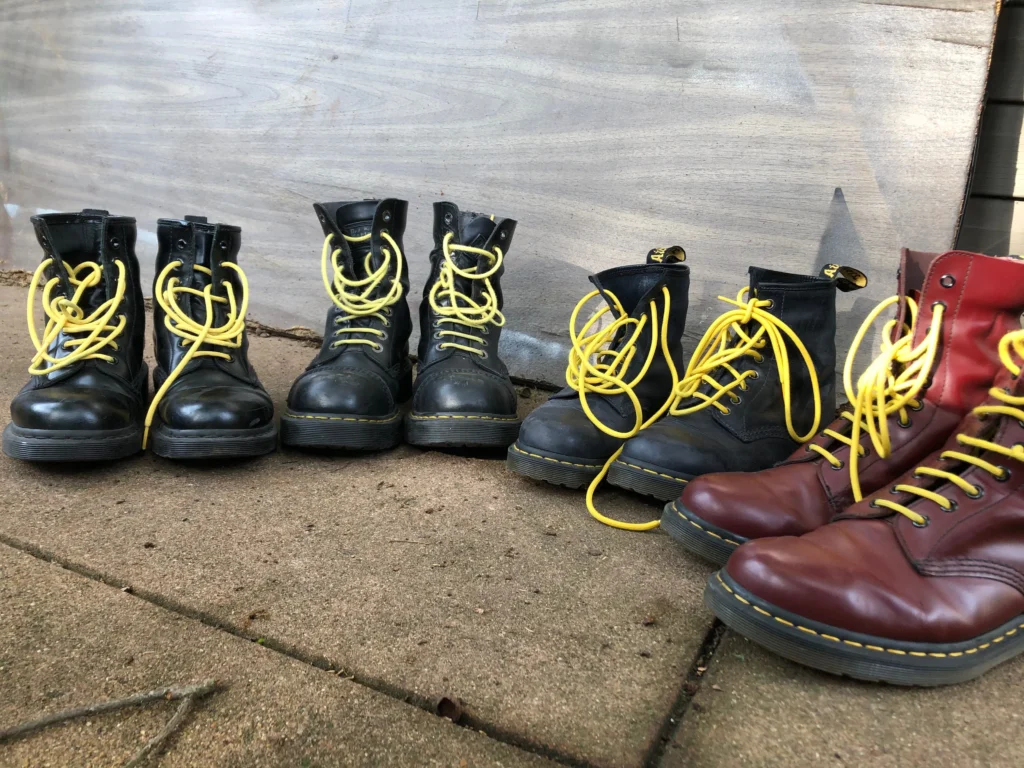
If you wear your boots daily, walk long distances or stand for hours, stability matters more than appearance. Techniques like criss-cross, military top-down or straight bar lacing distribute tension evenly and keep the boot predictable. They reduce hotspots and prevent the foot from sliding forward, which protects both your feet and the boot’s structure.
© Medium
If you wear tall boots and want maximum ankle hold, ladder lacing offers rigidity and control. It takes longer to set up, but once done it keeps the boot locked in place. This matters if you move a lot or carry weight. If speed and convenience matter, zipper-style lacing allows quick adjustment without sacrificing all structure. This is useful for people who put boots on and off multiple times a day.
More decorative patterns should be treated honestly. They prioritise appearance over comfort. That is not wrong, but it is a choice. Decorative lacing looks best on boots that are already broken in and worn in controlled settings rather than long days on your feet.
– Avoid over-tightening the lower eyelets
– Keep tension consistent on both sides
– Re-adjust after break-in as the leather softens
Lacing is not something you do once and forget. As boots age, your lacing should change with them.
That is why it matters. Lacing is maintenance, not decoration. It determines how your boots age, how they feel, and how they perform. Treat it as part of wearing boots properly, not as an afterthought.
Boot lacing techniques exist because different feet, boots and uses demand different solutions. Some methods prioritise comfort and long wear, others focus on structure, speed or visual balance. None are inherently right or wrong. What matters is choosing a technique that suits how you actually wear your boots, not how you think they should look in theory.
Clearing up the terminology
Boot lacing in the skinhead scene was never complicated. It became complicated later, when internet guides, fashion blogs and half-remembered “rules” started stacking names on top of the same basic techniques. In reality, skinhead boot lacing rests on three main methods. Everything else is either a variation, a tightening method, or decoration. If you understand these three, you understand the whole thing.
– Military top-down is not a lacing style. It is a way of tightening any style.
– Ladder lacing is its own method, not a type of straight lacing.
Straight bar lacing
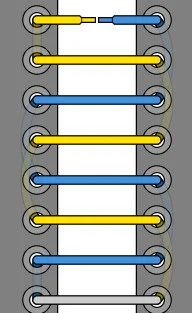
Straight bar lacing is visually clean and controlled. The horizontal bars create a uniform front, with the vertical runs hidden inside the boot. Historically, this method was used in military and parade contexts where neatness mattered. In subcultural settings, straight bar lacing became associated with discipline and sharp presentation. It is less forgiving than criss-cross lacing and requires more patience to set up correctly. Once done, however, it holds tension evenly and looks deliberate. This is a lacing style chosen consciously, not accidentally.

© Reddit-user JENKSY42
Once you strip away overlapping names, there are only three real options.
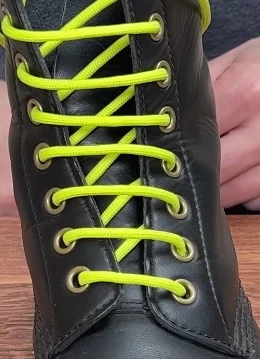
Criss-cross lacing
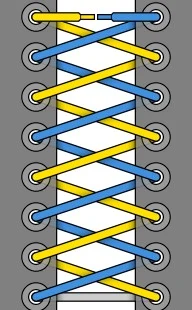
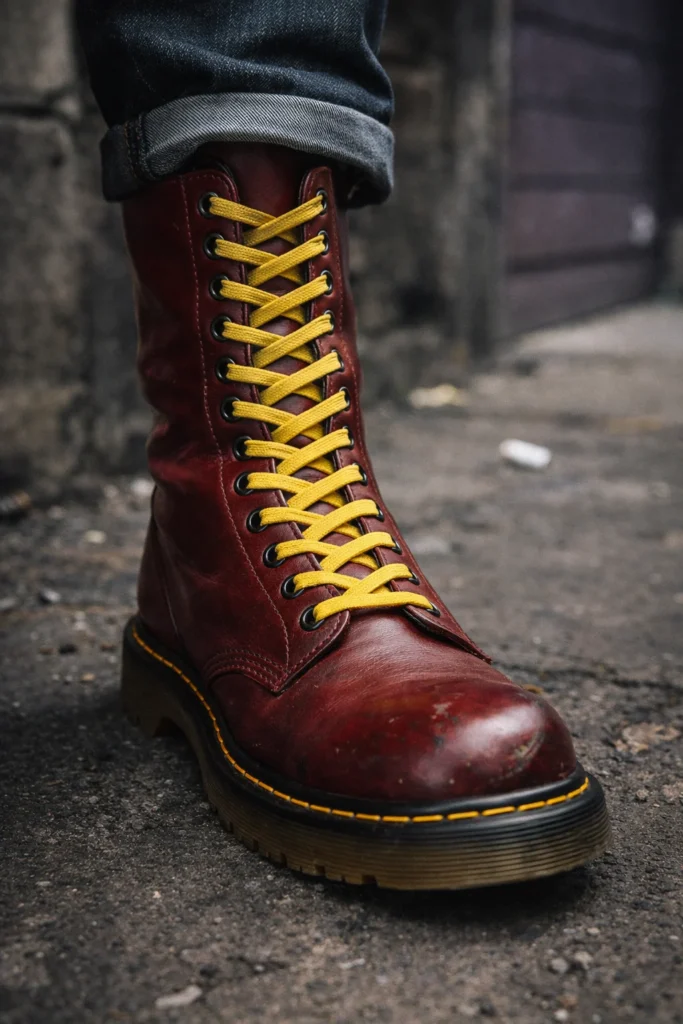
Criss-cross lacing is the default for a reason. It is strong, adaptable and forgiving. Pressure is spread evenly across the foot, making it ideal for long wear and varied foot shapes.
© Ian’s Shoelace Site/AI
This style dominated early workwear and remained common in skinhead culture simply because it worked. There is nothing flashy about it. That neutrality is its strength. Criss-cross lacing does not demand attention. It holds the boot together and gets on with the job. Even today, it remains the most practical option for people who actually wear their boots daily rather than treating them as costume.
Ladder lacing
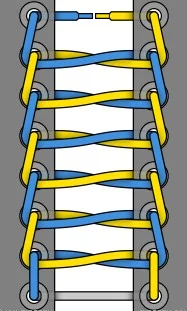
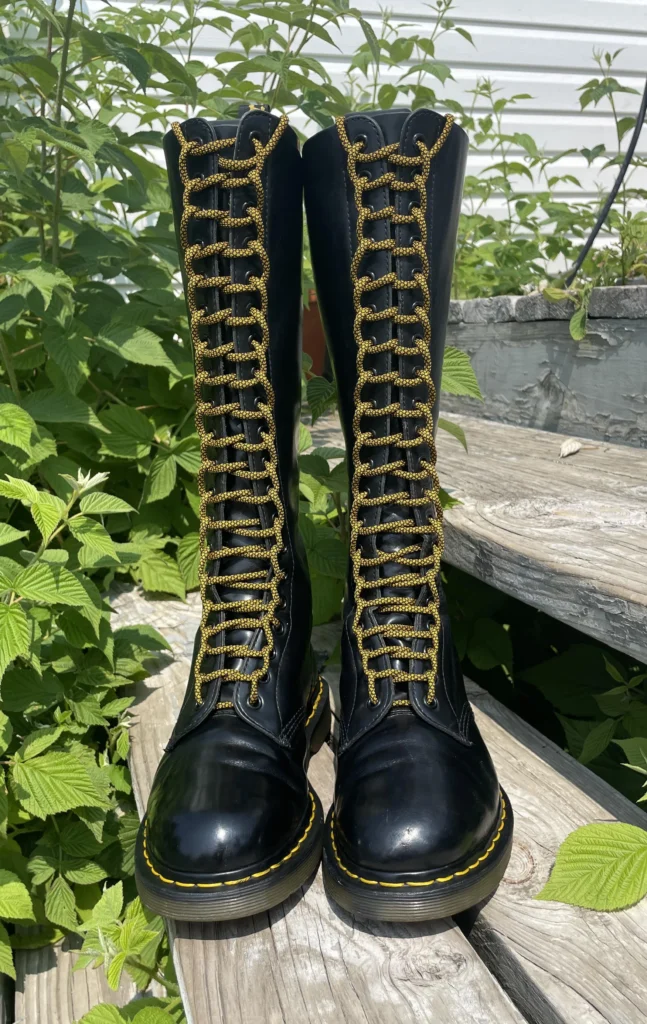
Ladder lacing creates rigid horizontal rungs running up the boot. Visually, it is one of the most striking techniques, especially on tall boots with 14 or more eyelets. Functionally, ladder lacing provides excellent stability. The structure locks the boot tightly around the foot and ankle, making it popular in military and security contexts. The downside is reduced flexibility and slower adjustment. In subcultures, ladder lacing is often chosen for its symmetry and severity. It looks controlled, structured and uncompromising.
© Ian’s Shoelace Site/Reddit-user Dickduluth
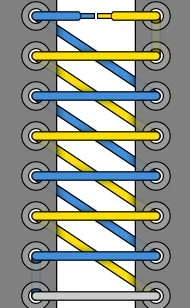
Zipper lacing
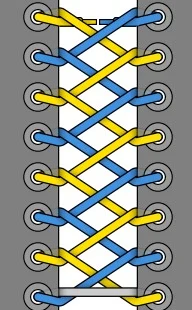
Zipper lacing is a functional variation designed for speed. The lace runs in a way that allows the boot to be loosened or tightened quickly by pulling from one end. This style is practical for people who put boots on and off multiple times a day. It sacrifices some visual symmetry in favour of efficiency. Zipper lacing has little historical symbolism. Its appeal is purely functional, which is exactly why it persists.
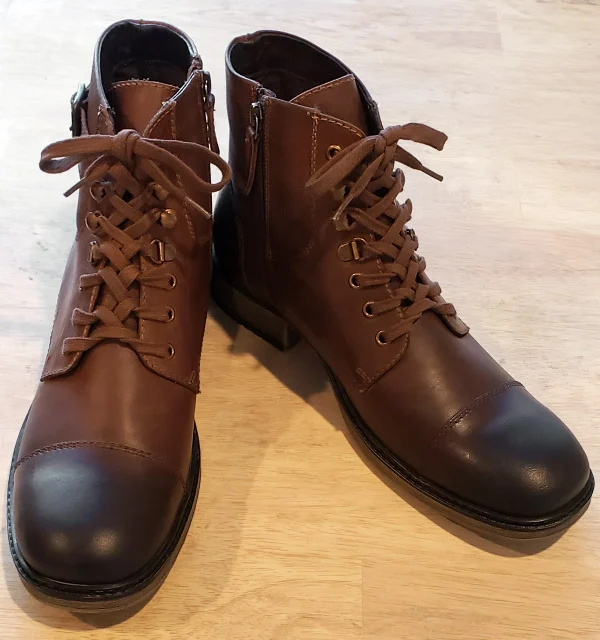
Sawtooth lacing
Sawtooth lacing runs diagonally in one direction, creating an asymmetrical pattern. Pressure is concentrated along one side of the boot, which can be useful for certain foot shapes. Visually, it looks aggressive and slightly unbalanced. This made it popular in punk and hardcore scenes where clean symmetry was not the goal. Sawtooth lacing is less about comfort and more about appearance and attitude.
Lace colour is dead
Lace colour once carried local meaning in specific places at specific times. It was never universal, never consistent and never as rigid as later retellings suggested. Today, lace colour as code is functionally dead. Scenes are global, meanings shift instantly, and most people wearing coloured laces do so for aesthetic reasons alone. Treating lace colour as political shorthand in 2025 is lazy at best and misleading at worst. History matters, but freezing it into rules does not. Understanding context is more important than repeating myths.
Boot lacing still matters because it demands deliberate effort in a culture that increasingly avoids it. You cannot shortcut it. You cannot automate it. You have to sit down, pull, tighten, adjust, and commit. That alone separates it from most modern styling choices. Lacing determines how a boot behaves. How it grips your foot. How it supports your ankle. How it wears over time. But it also determines how the boot presents itself to the outside world. Structured or loose. Clean or aggressive. Controlled or chaotic. Those decisions are made quietly, by the wearer, long before anyone else sees the result.
Unlike logos, branding or trend-driven signifiers, lacing does not announce itself. It does not ask for validation. Most people will never notice it at all. And the ones who do are usually the ones who understand what they are looking at. That is not accidental. That is the point. Boot lacing sits in a space where function and intent overlap. It is not decorative by default, but it can be. It is not symbolic by necessity, but it can carry meaning. That meaning is no longer imposed by scene rules or outdated codes. It is chosen.
In that sense, lacing has outlived the subcultures that tried to police it. What remains is personal discipline. A small, repeatable act that reflects how you move through the world and how seriously you take the things that carry you. That is why it still matters.
Lacing with intent
Boot lacing is often treated as a detail, but within the skinhead scene it has always been part of a broader way of carrying yourself. Boots were never an accessory or a statement piece. They were worn because they worked, and because they fit a uniform built on practicality, clarity and self-respect. Lacing sat naturally inside that mindset.
How you lace your boots says something about how you approach the whole look, even if most people never consciously notice it. Even tension, clean lines and a fit that actually supports your feet all contribute to a sense of order without tipping into stiffness. It is not about perfection or showing off knowledge. It is about things sitting right.
© skinsaubln/Cover of Richard Allen’s book Suedehead (1992)
That idea of care runs through skinhead culture more broadly. You take care of your boots because they take care of you. You clean them, replace worn laces, adjust the fit as the leather softens. None of this is dramatic or ritualised. It is simply maintenance, done because it matters over time.
Boots remember how they are worn. Creases, stress points and wear patterns all trace back to lacing choices made day after day. Lacing with intent helps boots age evenly and feel right on your feet, whether you are standing for hours, moving through a crowd or just walking home. It is a quiet form of discipline, not enforced by rules but chosen.
In that sense, lacing sits somewhere between function and identity. It is not a code to follow or a test to pass. It is part of wearing boots properly and carrying a look that is grounded rather than performative. Pay attention to it, adjust when needed, and let it support the way you move rather than distract from it.
Sources: Ian’s Shoelace Site